







Insights , 5 min read
How to refuse entry as a door supervisor
How door supervisors can refuse entry on licensed premises in the UK: lawful grounds, a calm method, records, and the limits of the role.
 Kingpin Security
Knowing how to refuse entry as a door supervisor is one of the most searched, and most useful, parts of the job. A refusal is not a confrontation by default. It is the consistent application of the venue's admissions policy, and, on licensed premises, part of upholding the licensing objectives. Official SIA training covers the law on refusing entry and ejecting customers, and how to do both in a way that reduces the risk of conflict. This is practical guidance, not legal advice. Check current SIA guidance, your assignment instruction and the premises policy before you rely on any summary.
We are a North West firm, based in Holmes Chapel, and our door supervision officers are SIA licensed and screened to BS 7858. A well-run door treats a refusal as a normal, professional decision, not as a test of nerve.
Who can refuse entry, and on what grounds
Published SIA training material states that a licence holder, other staff, and door supervisors acting on their behalf can refuse entry to licensed premises, particularly to enforce the licensing objectives. Typical grounds listed in official conflict management scenarios include:
- the venue already being full to capacity
- the person being under the influence of drink or drugs
- the person being underage, or unable to provide appropriate ID
- dress code
- not paying the admission charge
- refusal to be searched as a condition of entry
- possession of weapons or drugs
- a ban, a pub-watch ban, or a court exclusion order
- aggressive behaviour at the point of entry
House rules, such as a dress code or a search policy, should be clear and applied consistently. A policy that appears only when a queue looks difficult will not stand up as a policy. Refusals must also comply with the Equality Act 2010. If you are unsure whether a decision is consistent with the policy or with equality law, ask the duty manager or your supervisor rather than inventing a new rule on the step.
How to refuse entry as a door supervisor: a calm method
The aim is a short, dignified exchange. Greet the person, explain the reason in one or two sentences, and give them a moment to take it in. Official training also includes offering a legitimate next step where there is one, such as waiting until someone leaves if the venue is at capacity. Do not argue the merits of the policy at length, and do not be drawn into a comparison with the last person you let in.
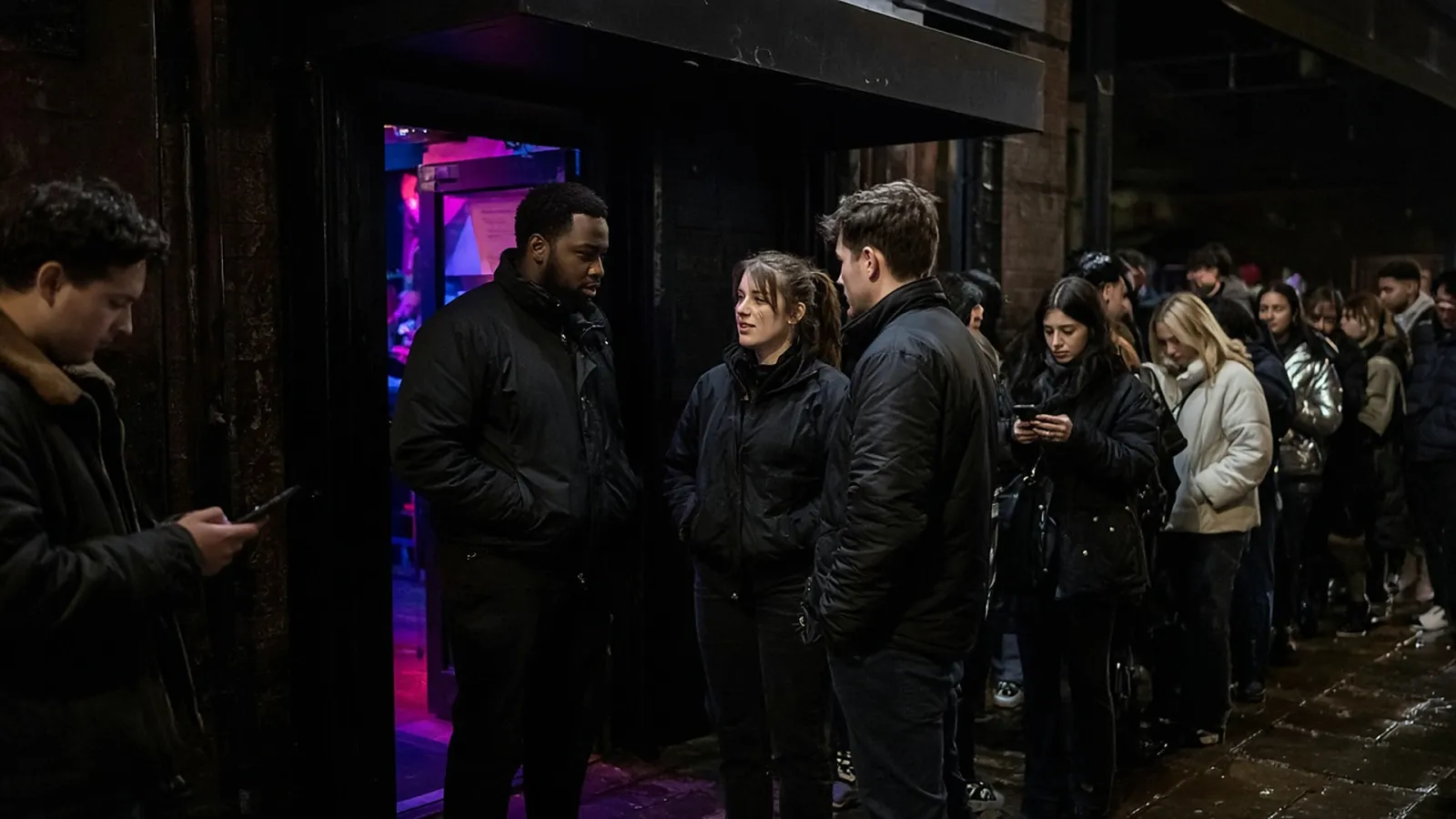
Use a colleague as a witness where you can, and make sure the door is covered while you speak. If CCTV covers the entrance, stand where the conversation can be seen. Keep your language factual: "I cannot let you in because we are at capacity" is enough. Then log the refusal.
When a refusal becomes an ejection
The same official material states that anyone who refuses to leave when asked becomes a trespasser and can be lawfully ejected, using only such force as is necessary (in Scotland, only such force as is reasonable). Physical intervention is taught as a last resort. If you have not been trained and assessed in a technique, do not invent one. Follow the venue's escalation plan and call the police when the situation has gone beyond the door.
If you are asking someone to leave who may be vulnerable, official training asks you to consider the risks: isolation, assault, or being too affected by drink or drugs to look after themselves. Options in that material include calling a friend, a licensed taxi, a safe haven, street pastors or the police.
For an illustrative example, imagine a guest who arrives after last entry and insists that a friend inside will vouch for them. The officer explains that last entry has passed, offers to pass a message to the friend, and logs the refusal. The guest is unhappy but leaves. That is an illustrative example, not a real incident. The decision was the policy, explained once and recorded.
What to write down
A refusal that is not recorded is harder to explain later to a manager, a licensing officer or the police. Note the time, a brief description, the reason, any witnesses, and what you said. If an item was found, or an ID was inspected, record that fact without seizing the document. The SIA has stated that a door supervisor licence gives no additional legal powers and that there is no legal power to seize an ID. You may inspect it with permission, and you may refuse entry if permission is not given.
If you would like a briefing-led door team for a venue in the North West, request a quote or contact us. Read the official page on SIA rules and training about ejecting customers alongside this guide, and check it for updates.
Frequently asked questions
Can a door supervisor refuse entry for any reason?
Official training describes a range of legitimate grounds, particularly to enforce licensing objectives and the venue's published policy. Decisions must still be consistent and must comply with equality law. If you are unsure, ask a supervisor. This is not legal advice.
Do I have to explain why I am refusing someone?
A short, calm explanation is part of refusing entry in a way that reduces conflict, which is the aim of official conflict management training. It also makes the log clearer.
What if the person will not leave the doorway?
Repeat the reason, keep the exchange short, involve a colleague, and follow the venue's escalation plan. Official training states that a person who refuses to leave when asked becomes a trespasser and may be ejected using only necessary (or, in Scotland, reasonable) force. Call the police when that is the appropriate next step.
Should I take ID from someone I have refused?
No. The SIA's published position is that there is no legal power to seize an identification document. You may inspect it with permission, and you may refuse entry if you cannot be satisfied. Follow local protocols and current official guidance.