




Insights , 5 min read
Challenge 25 and spotting fake ID on the door
How Challenge 25 and Challenge 21 work on UK licensed premises, what proof of age looks like, and how door supervisors should handle doubtful ID.
 Kingpin Security
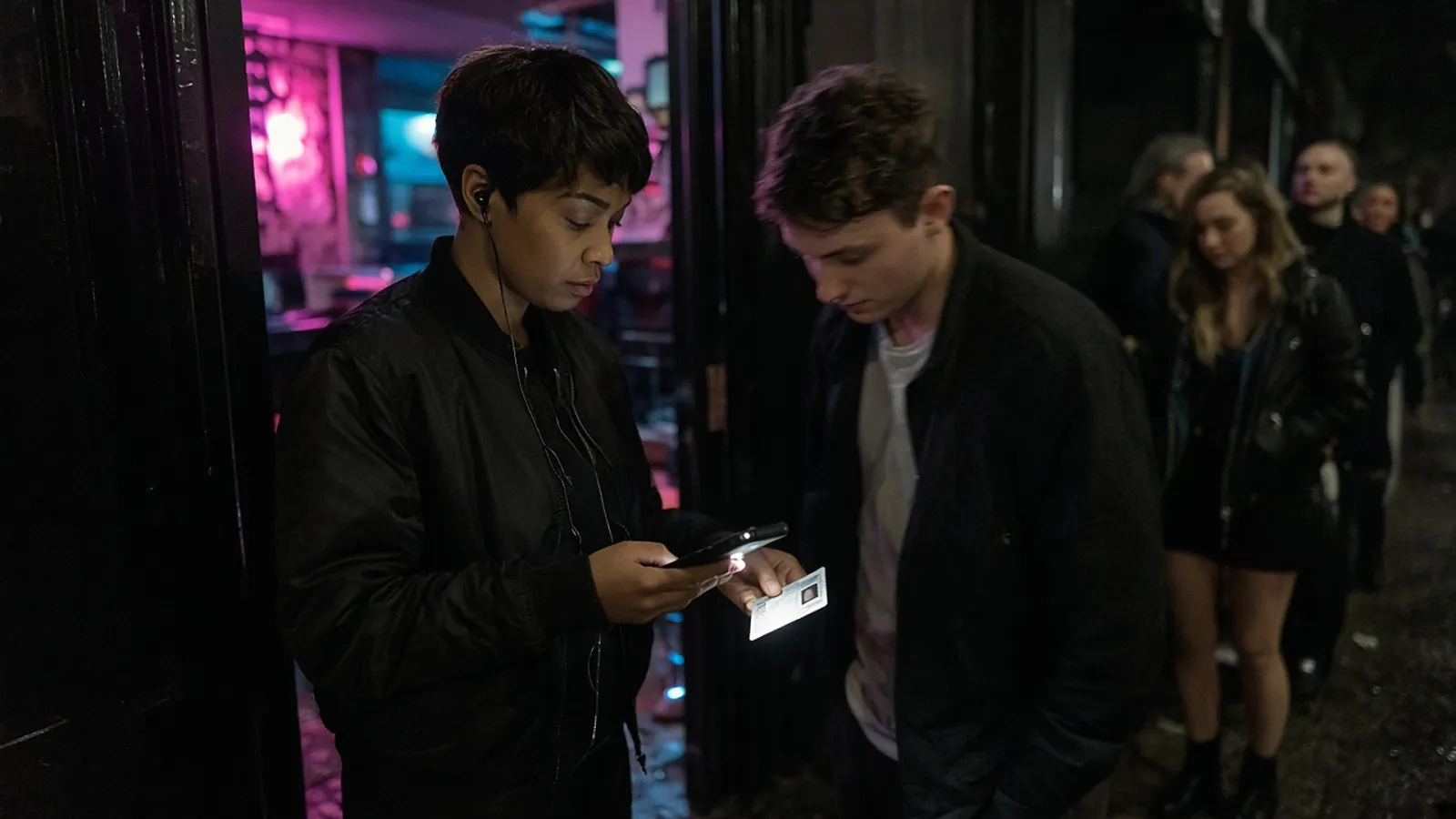
Challenge 25 is one of the questions door supervisors are asked about most often, along with how to handle a doubtful or fake ID. In England and Wales, licensed premises must have an age verification policy for the sale or supply of alcohol. The legal minimum, set out in the mandatory licensing conditions, is that anyone who appears under 18 must be asked for acceptable identification before alcohol is served. Challenge 21 and Challenge 25 go further than that minimum, by asking for ID from anyone who appears under 21 or 25. Some premises also have one of those schemes as a condition of their licence. This is a practical guide, not legal advice. Follow the venue's written policy and current Home Office and SIA guidance.
We provide door supervision for hospitality and nightlife from Holmes Chapel in Cheshire. Our officers are SIA licensed and screened to BS 7858. Age checks only work if they are consistent, courteous and recorded.
What the law requires, and what Challenge 25 adds
Home Office guidance on the mandatory conditions for licensed premises says the age verification policy must, as a minimum, require people who appear under 18 to produce identification bearing their photograph, date of birth and a holographic mark, before they are served alcohol. Examples given include a photocard driving licence, a passport, or a proof-of-age card bearing the PASS hologram. Other documents that meet those criteria may also be acceptable. Staff who supply alcohol must be made aware of the policy. The same guidance states that this minimum does not prevent best practice schemes such as Challenge 21 or Challenge 25.
So Challenge 25 is not, by itself, the legal minimum in England and Wales, unless the premises licence requires it. It is a widely used way of meeting, and going beyond, that minimum. If your venue's policy or licence condition says Challenge 25, that is the standard you apply, not a guideline you relax for a regular.
Digital proof of age
From 15 September 2026, The Licensing Act 2003 (Mandatory Licensing Conditions) (Amendment) Order 2026 allows an age verification policy in England and Wales to permit identification in digital form, in specified circumstances. It is not a requirement to accept digital proof of age. Physical documents of the kind already described remain acceptable. Where a venue does accept digital proof, the Order requires an agreement with a registered digital verification services provider, and sets conditions about age confirmation and a medium level of confidence. If your venue has not adopted that option in its policy, do not improvise it on the door. Check the current policy and official guidance.
How to check ID on the door
The SIA has stated that holding a door supervisor licence gives no additional legal powers to that of a private citizen, and that there is no legal power to seize an ID. It may be reasonable to inspect a customer's ID with their permission, because presentation of ID is often a condition of entry. If permission is not granted, entry may be refused.
In practice, a careful check is methodical rather than theatrical. Ask for the ID politely. Look at the photograph against the person in front of you, check the date of birth, and look for the holographic or other security feature your policy requires. Hold the card in good light. If something feels wrong, take your time, ask a colleague for a second look, and do not be rushed by a queue.
Signs that should make you slower and more careful include a photograph that does not match, a date of birth that does not fit the person you are looking at, a damaged or peeling laminate, uneven typography, or a security mark that does not catch the light as you would expect. None of those signs is, on its own, a diagnosis, and this is not a forensic manual. If you are not satisfied, refuse entry under the venue's policy and record the reason. Do not confiscate the document.
An illustrative example
Imagine a busy Saturday under a Challenge 25 policy. A guest who looks young hands over a photocard. The photograph is similar but not quite right, and the laminate is lifting at one corner. The officer looks again in better light, is not satisfied, explains that they cannot accept the document, refuses entry, and logs the time and reason. They do not keep the card. That is an illustrative example, not a description of a real incident.
Apply the same standard to everyone who appears under the age in your policy, including people you have seen before. A scheme that is applied only to strangers will not protect the premises licence.
If you would like a door team that is briefed on your age verification policy, request a quote or contact us. Check the live Home Office and SIA pages, and your own licence conditions, before you change a door practice.
Frequently asked questions
Is Challenge 25 a legal requirement?
In England and Wales the mandatory minimum is an age verification policy that requires ID from anyone who appears under 18, with a photograph, date of birth and holographic mark. Challenge 21 and Challenge 25 are additional schemes, unless they are written into the premises licence. Follow the policy that applies to your venue and check current official guidance.
What ID is acceptable?
Official guidance gives examples of a photocard driving licence, a passport, or a PASS hologram proof-of-age card, and says other documents that meet the same criteria may also be acceptable. From 15 September 2026 a venue in England and Wales may also permit digital proof of age if its policy and the statutory conditions are met. Do not accept a form of ID your policy does not allow.
Can I take a fake ID off someone?
The SIA's published position is that there is no legal power to seize an identification document. You may inspect it with permission and refuse entry if you are not satisfied. Follow local protocols and official guidance rather than keeping the card.
What should I write in the log?
Record the time, a brief description, the reason for the refusal, and that ID was requested or inspected. Do not write accusations you cannot support. A clear, factual note is enough.